
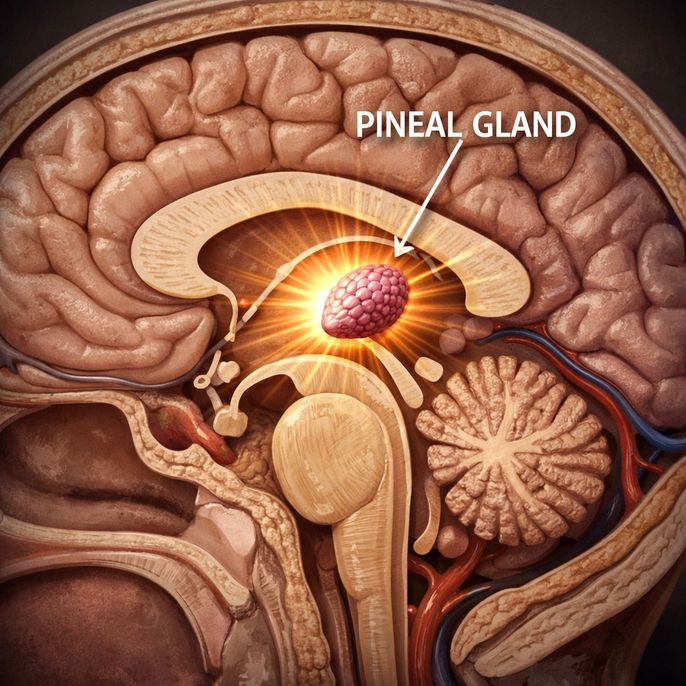
The Pineal Gland, Structure, Function, Calcification and Re‑activation
© Kate Shemirani 2026
WHAT THE PINEAL GLAND IS
The pineal gland is a small, pine‑cone–shaped endocrine gland located deep within the centre of the brain, between the two hemispheres, seated in the groove where the two halves of the thalamus meet. Despite its size, it exerts a profound influence on human biology, circadian rhythm, neuroendocrine balance, and perception. The pineal gland is one of the most highly vascularised structures in the brain and lies outside the blood–brain barrier, making it uniquely sensitive to circulating nutrients, toxins, and environmental influences.
HOW THE PINEAL GLAND WORKS
The pineal gland’s primary biochemical function is the synthesis of melatonin from serotonin. Melatonin regulates circadian rhythm, sleep–wake cycles, hormonal timing, immune modulation, antioxidant defence, and neurological repair during sleep. Melatonin secretion is governed by light exposure. Darkness stimulates production, while artificial light, particularly blue light, suppresses it. This positions the pineal gland as a biological interface between the external environment and internal physiology.
WHY THE PINEAL GLAND IS IMPORTANT
Healthy pineal function supports restorative sleep, hormonal balance, immune resilience, emotional regulation, and neurological clarity. Melatonin is also one of the body’s most potent endogenous antioxidants, protecting mitochondrial and neural DNA from oxidative damage. Disruption of pineal function has been associated with insomnia, mood disorders, hormonal dysregulation, accelerated ageing, impaired immunity, and cognitive fog.
WHAT DAMAGES AND CALCIFIES THE PINEAL GLAND
Pineal calcification refers to the deposition of calcium phosphate crystals within the gland. This process is not inevitable and is strongly associated with environmental and dietary exposures. Contributing factors include fluoride exposure, heavy metals, chronic inflammation, endocrine‑disrupting chemicals, artificial light exposure at night, and deficiencies in iodine, magnesium, and other trace minerals. Calcification reduces melatonin output and interferes with the gland’s electrical and biochemical signalling capacity.
WHAT PINEAL CALCIFICATION DOES TO HUMANS
When calcified, the pineal gland loses rhythmic sensitivity and hormonal precision. This may result in poor sleep quality, blunted circadian rhythm, emotional flattening, anxiety, reduced dream activity, impaired intuition, and diminished perceptual clarity.
DECALCIFICATION AND PINEAL SUPPORT PROTOCOL
Decalcification is not a single action but a combined process of reducing toxic burden, restoring mineral balance, and supporting neuroendocrine rhythm.Key supportive substances include;
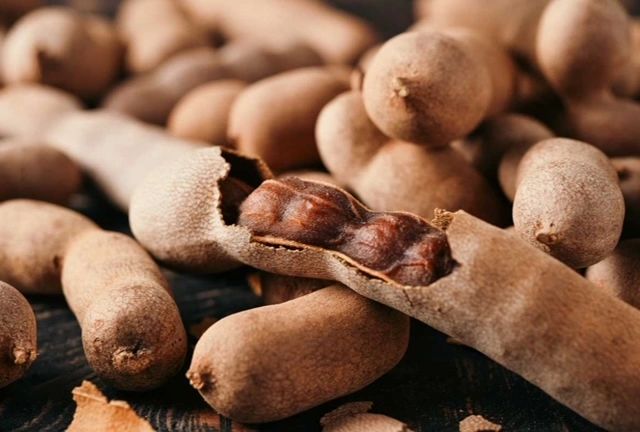
Mexican Tamarind (Tamarindus indica)
Traditionally used for detoxification and mineral chelation. Tamarind contains organic acids and polyphenols that may assist in reducing excess inorganic calcium deposition.Traditional dose: culinary use or 500–1000 mg extract daily Modern supplemental dose: 500–1500 mg daily
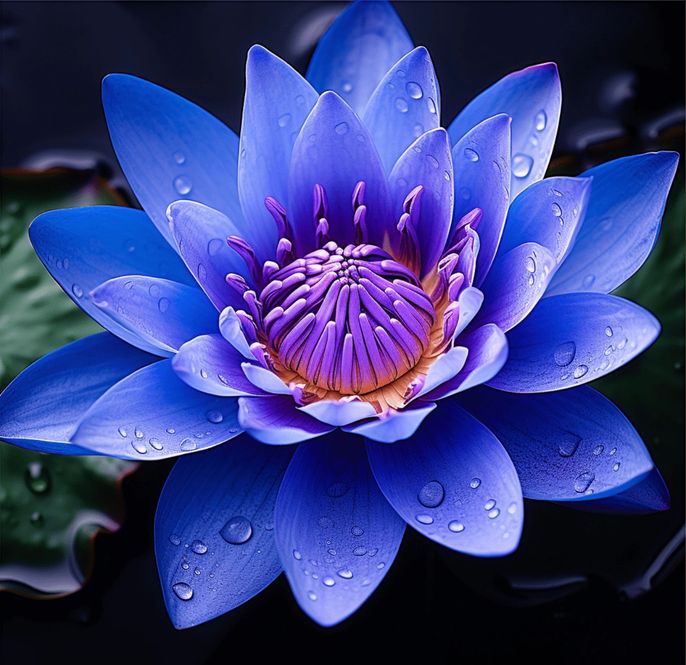
Blue Lotus (Nymphaea caerulea)
Historically used in ancient Egypt to enhance dream states and perceptual awareness. Contains aporphine alkaloids influencing dopamine pathways.
Traditional dose: infusion or ceremonial preparation
Modern dose: 100–300 mg extract, used intermittently
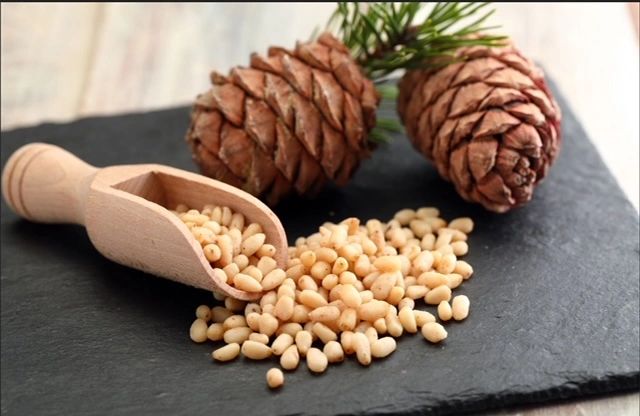
Pine Nuts
Rich in magnesium, zinc, and healthy fats essential for neural signalling and endocrine support.
Dietary dose: small daily handful (15–30 g)
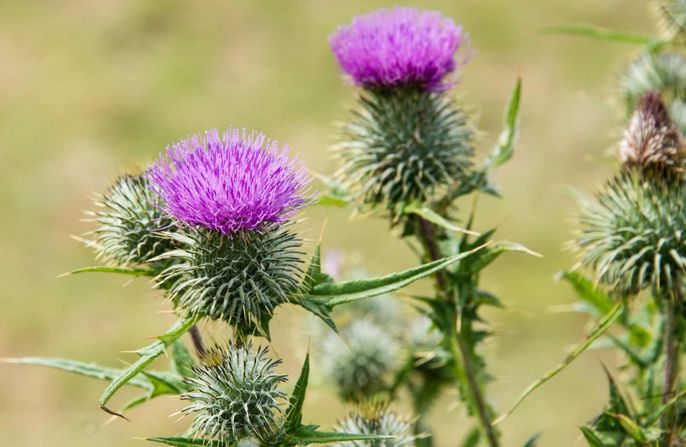
Milk Thistle (Silybum marianum)
Supports liver detoxification, indirectly reducing toxic burden contributing to glandular calcification.
Traditional dose: decoction or tincture
Modern dose: 200–400 mg silymarin daily
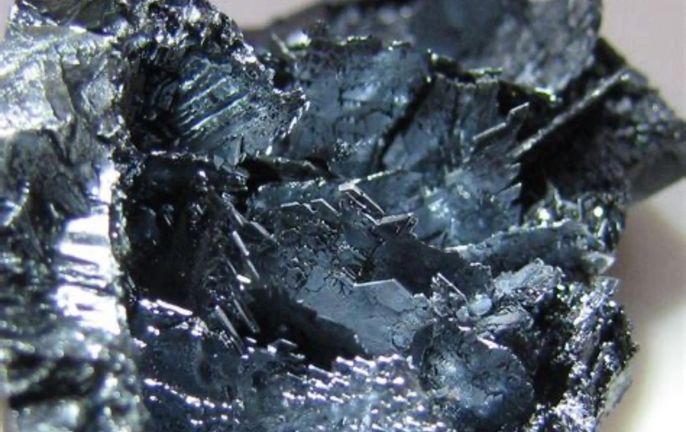
Iodine
Essential for endocrine health and halogen balance. Adequate iodine supports displacement of fluoride from tissues.
Traditional dose: dietary sea vegetables
Modern dose: 150–300 mcg daily (individualised)

Spirulina Rich in chlorophyll, phycocyanin, and trace minerals.
Demonstrated binding affinity for heavy metals and fluoride.Traditional dose: whole food use
Modern dose: 1–3 g daily

Schisandra Berries (Schisandra chinensis)
A superior adaptogenic tonic in Traditional Chinese Medicine. Supports liver detoxification, glutathione production, mitochondrial protection, and neuroendocrine regulation. Schisandra reduces toxic load while enhancing neurological resilience, making it particularly relevant for pineal support.
Traditional dose: 1–3 g dried berries as decoction
Modern dose: 500–1500 mg extract daily
HISTORICAL AND ANCIENT CONTEXT
Across cultures, the pineal gland has been associated with inner vision, rhythm, and consciousness. In ancient Egypt, the Eye of Horus mirrors pineal anatomy. In Hindu traditions it corresponds with the Ajna or third eye. Taoist medicine associated it with spiritual refinement. René Descartes described it as the “seat of the soul.”
CONCLUSION
The pineal gland reflects the interface between biology, environment, and perception. Supporting it requires attention to light, rhythm, detoxification, mineral balance, and traditional wisdom aligned with modern physiology.
Andreas Moritz describes Serotonin and Melatonin as the master hormones that regulate all other body processes. i.e. the circadian rhythms. What do you think about SSRI drugs?