PSA Anyone?

Fellas, as soon as you hear the word or see the word …’prostate’, you will be traumatised all over again, remembering the twang of your doctors silicone glove just before he parts your cheeks!
Whether you’re owning that prostate, once had one, never had one, or are just here for the truth, pull up a chair, sit on your prostate or the space it once occupied... and become a true Minister of Health!
Today’s reminder is simple. A number is not a diagnosis.
Nope...It’s a clue.


PSA. Cholesterol. Blood sugar. Hormones. Inflammation markers. They’ve all been promoted as crystal balls, when in reality they’re more like mood rings, highly sensitive, easily influenced, and prone to drama!
Let Us Take PSA.
Prostate specific, not cancer specific.
It rises if you’re inflamed, infected, cycling uphill, stressed, ageing, or frankly… alive. Yet men are still being funnelled from “routine blood test” to biopsy to lifelong consequences, often for something that would never have harmed them.
That’s not medicine. That’s marker worship. Markers should be read and read in context
Alongside symptoms
With history
With imaging
With common sense
And with the ‘patient’ fully informed. If you are a bloke...that's you!
Instead, they’re used like tripwires. Step on the number and cue panic, protocols, profit.
And ladies , don’t switch off. This applies to you too.
CA-125. Cholesterol. Bone density. Thyroid numbers.
Same game, different organs.
And Us…. Over here? We don’t heal spreadsheets. We heal people. Come and be a minister of health on my website and round table on a Thursday night at 8 pm GMT. The Natural Army Recruits will welcome you.
Just purchase a membership here. It’s £5.99 a month.
https://kateshemirani.com/shop
Back to those tests….Before you fear a marker, ask what it’s actually marking.
Before you consent to a pathway, ask who benefits from it.
Before you accept a label, ask whether it changes outcomes or just billing for the NHS or Private health Provider.
And why sovereignty starts with understanding your own body not surrendering it to medical algorithms...hence the digital ID!
Eat well. Cut down on the red wine, meat, diary and sugar fellas for starters. Hydrate properly
Stretch like the cat and dog when you wake and before the walk
And remember, you are not a lab value nor a lab rat!
Now you know what to do...share the love!
Kate xx
Now read on.
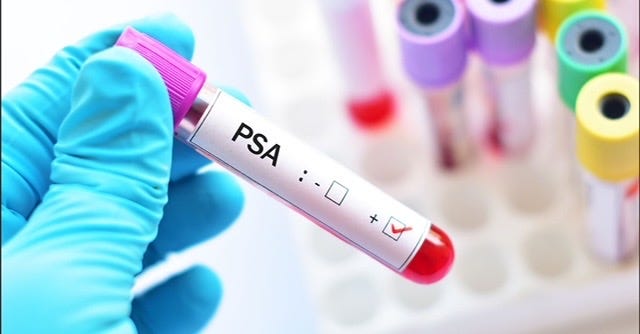
The Four Fundamental Arguments Against PSA as a Diagnostic Test for Prostate Cancer
1. PSA Is Prostate-Specific, Not Cancer-Specific
Prostate-specific antigen (PSA), first characterised in the 1970s, is produced by all prostate tissue, including normal prostate cells, benign prostatic hyperplasia (BPH), inflamed tissue, and cancerous cells. PSA elevation therefore does not diagnose cancer.
PSA levels can rise due to multiple non-cancerous factors, including
Recent ejaculation
Prostate inflammation or infection
Benign prostate enlargement
Mechanical stimulation such as cycling or prostate examination
These confounding factors are rarely explained to patients, yet they significantly affect PSA values. As a result, PSA testing lacks diagnostic specificity and produces misleading signals that are routinely interpreted as cancer risk when they are not.
2. There Is No PSA Threshold That Reliably Detects Prostate Cancer
There is no PSA level at which prostate cancer can be reliably confirmed or excluded. Men with very low PSA levels may harbour aggressive cancer, while men with very high PSA levels may have no cancer at all.
Clinical reality demonstrates that
Prostate cancer has been diagnosed in men with PSA levels below 1.0 ng/mL
Many men with PSA levels above 10–11 ng/mL have no malignancy
Biopsy thresholds were set arbitrarily and later lowered, not because of improved diagnostic accuracy, but to increase cancer detection rates. This practice led to a surge in biopsies and overdiagnosis, particularly of slow-growing tumours that would never have caused harm.
PSA therefore cannot function as a diagnostic discriminator, and its use leads to unnecessary investigations, anxiety, and invasive procedures.
3. PSA Cannot Distinguish Indolent From Aggressive Cancer
PSA testing is incapable of differentiating between
Indolent, non-lethal prostate cancers
Aggressive, fast-spreading prostate cancers
This limitation is often illustrated by the “turtle versus rabbit” analogy
The turtle represents slow-growing cancers that may never threaten life
The rabbit represents aggressive cancers capable of rapid spread and metastasis
PSA detects both equally, without distinction. As a result, large numbers of men are diagnosed with biologically insignificant cancers and subjected to surgery, radiation, or hormone therapy, while the test fails to reliably identify which cancers pose real danger.
This inability to distinguish biological behaviour renders PSA unsuitable as a diagnostic tool.
4. PSA Screening Does Not Reduce Overall Mortality and Causes Net Harm
Despite decades of widespread use, population-wide PSA screening has not been shown to extend life expectancy. Large studies and expert reviews have failed to demonstrate a meaningful reduction in prostate cancer mortality attributable to PSA screening.
What PSA screening does demonstrably cause is
Overdiagnosis
Overtreatment
Surgical complications such as incontinence and erectile dysfunction
Psychological distress
Harm to elderly and medically frail men unlikely to benefit
Notably, studies of US Veterans Affairs Medical Centers showed that large numbers of men over 85 years old, many with multiple serious illnesses and limited life expectancy, were still being screened with PSA tests, despite guidelines advising against this practice.
In effect, PSA screening becomes a randomised detection exercise, likened by senior urologists to “flipping a coin,” producing harm without clear benefit.
The Consolidated Conclusion?
PSA testing… and what it does & does not do….
Does not diagnose prostate cancer
Has no reliable diagnostic threshold
Cannot distinguish harmless from lethal disease
Does not reduce population mortality
Produces significant and measurable harm
As such, PSA fails the basic criteria of a diagnostic screening test and its continued use represents a structural failure in modern preventive medicine.
Bibliography
The Great Prostate Hoax – Richard J. Ablin PhD, Ronald Piana
Stamey TA et al. Prostate-specific antigen as a serum marker for adenocarcinoma of the prostate. New England Journal of Medicine.
Walter LC et al. PSA screening among elderly men with limited life expectancy. Journal of the American Medical Association.
U.S. Preventive Services Task Force. Screening for Prostate Cancer Recommendations.
Andriole GL et al. Mortality results from a randomized prostate-cancer screening trial. New England Journal of Medicine.
Share this post
84 y/o male, 24 years post prostate removal and treatment for prostate cancer. Has recent PET scan that they said showed a tiny met and has PSA level that Drs say indicates treatment. Ie Lupron etc. Does not tolerate these drugs or ca therapy well at all. Many side effects. What to do?
I have recently heard that iodine deficiency could be a partial cause to an enlarged prostate. Apparently the problem is not as prolific in Japanese men due to the high fish and seaweed diet, both excellent sources of iodine. A relative of mine suffers with this and has to self catheterise to urinate. Has done for many years. I have got him to cut out sugar from his diet and suggested iodine in small quantities as too much can cause thyroid problems.